

Black Challenge Target World Cup Glory as Samson Deen Calls for National Support Ahead of Mexico 2026

By Doe Ama Yeboah
ACCRA, Ghana — Ghana’s national amputee football team, the Black Challenge, have intensified preparations for the 2026 WAFF Amputee Football World Cup, with head coach Stephen Richard Obeng declaring the ongoing training camp their best yet as the African champions set their sights on global glory in Mexico.
Speaking during a media engagement at a training session at Mensah Sarbah Park, University of Ghana, Legon, Stephen Richard Obeng expressed confidence in the team’s preparation, determination and collective ambition, insisting that the players were embracing the challenge rather than feeling pressured by the expectations surrounding their World Cup campaign.
Ghana will compete in Group D alongside Angola, Colombia and Iraq at the tournament, scheduled to take place in San Juan de los Lagos, Mexico, from November 13 to 22, 2026.
With the tournament approaching, the Black Challenge are combining intensive training with a renewed determination to demonstrate that Ghana’s dominance in African amputee football can translate into success on the world stage.
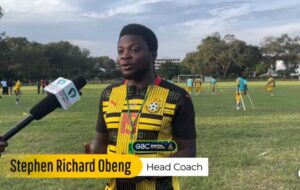
‘This has been our best training camp yet’ — Stephen Richard Obeng

Stephen Richard Obeng described the team’s preparations as encouraging, highlighting the players’ motivation, commitment and willingness to work towards a common goal.
“The camping has been amazing so far. I can confidently say this has been our best training camp yet,” he said.
“When you look at the playing side and the level of preparation, you can see how motivated the players are. They are excited to wear the national team jersey and represent the nation.”
The coach explained that the team had been training in both morning and evening sessions since arriving at camp, with the demanding schedule designed to strengthen their physical capacity, tactical organisation and overall readiness for the competition.
According to Stephen Richard Obeng, the quality of their opponents makes the intensive preparations necessary, particularly as Ghana seek to progress beyond their previous World Cup performances.
“We have been training in both morning and evening sessions since we arrived at camp because we believe there is a lot of work to be done, especially considering the group we find ourselves in,” he said.
“We will be facing Iran, Colombia and Angola, teams with strong international experience, including a former world champion. That is why we are holding these intensive training sessions to build our capacity and prepare ourselves in every aspect of the game.”
Despite the difficult challenge ahead, Stephen Richard Obeng insisted that the team would not allow pressure to undermine its ambitions.
“There is no pressure on the team. We do not work under pressure; instead, we embrace challenges,” he said.
“Our name is the Black Challenge, and we have set a challenge for ourselves to reach the final and, by the grace of God, win the gold medals.”
The coach added that the team hoped their success would inspire national celebrations, expressing optimism that a historic triumph could earn them widespread recognition across the country.
“We believe that when we achieve this feat, the President will declare a public holiday for all Ghanaians to celebrate with us,” he said.
Captain Opentil: ‘We are not going there just to make up the numbers’
Captain Richard Arthur Opentil has also expressed confidence in Ghana’s ability to compete with the world’s best, drawing on his experience leading the national team through major international competitions.
Richard Opentil, who has represented Ghana at four African championships and two previous World Cups, said the team’s experience and record of continental success had strengthened its belief ahead of the Mexico tournament.
The upcoming competition will be his third World Cup appearance.
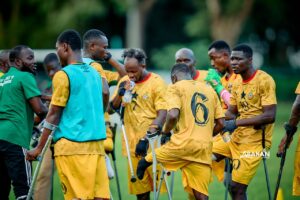
Reflecting on the team’s preparations, the captain said the intensity of the training session witnessed by journalists was evidence of the players’ determination to arrive in Mexico ready for the challenge.
“You saw for yourselves today that it was an intensive training session. This is part of our preparation for Mexico 2026,” Opentil said.
He recalled Ghana’s previous World Cup campaigns, during which the team reached the quarter-final stage on both occasions, and stressed that the players were determined to take another step forward.
“I have led the team to four African Cups, winning three for the team, and two World Cups. This will be my third World Cup. In our previous two World Cup appearances, we reached the quarter-final stage,” he said.
For Opentil, Ghana’s three African championship victories provide a strong foundation, but the captain believes the team must work even harder to establish itself among the leading nations in the sport.
“We are not under pressure. You all know what we can do. We have given you three African Cups back-to-back, and this is the world stage. We are going to push harder,” he added.
The captain was emphatic that Ghana would travel to Mexico with ambitions beyond participation, promising that the team would compete fiercely against its opponents.
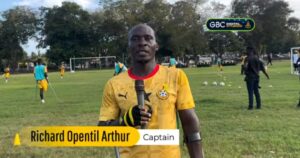
“Many countries are considered underdogs, but as African champions, we are not going there just to make up the numbers. We are going to give our opponents strong competition, and we are going to raise Ghana’s flag high.”
Opentil, however, called for greater encouragement from Ghanaians as the team prepares to represent the country on the international stage.
“All we need from the country is motivation,” he said.
His appeal reflects a broader message emerging from the team’s preparations: while the players are responsible for delivering performances on the pitch, national recognition and support could play an important role in sustaining their ambitions.
Samson Deen challenges Ghana to recognise its world-class amputee footballers
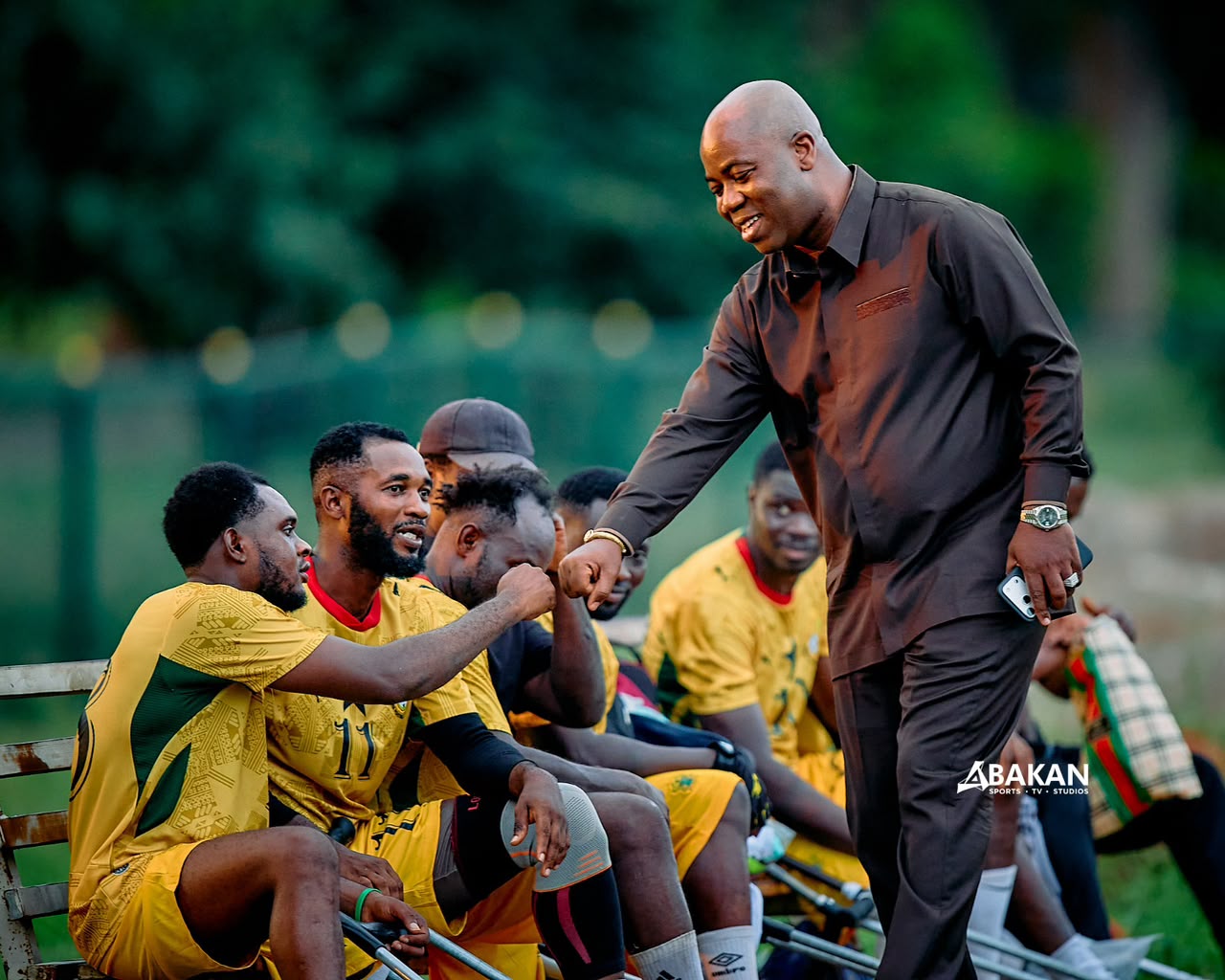
President of the Africa Paralympic Committee, Samson Deen, has urged the media and the wider Ghanaian public to give the Black Challenge the attention and recognition he believes their achievements deserve.
Addressing the team’s preparations, Deen highlighted Ghana’s remarkable record in African amputee football, pointing to victories at the 2021, 2023 and 2024 continental championships.
He noted that several members of the squad remain active in professional football in Turkey, where they continue to develop their abilities and compete at a high level.
“Over the past four years, the Black Challenge have competed in three different African championships and won all three,” Deen said.
“If you look at what happened in 2021, 2023 and 2024, you will realise that the core members of the team are still here and continue to play active football in Turkey, where they pursue their professional careers.”
For Deen, the team’s achievements underline the need for a more deliberate approach to preparation, discipline and player welfare.
He said the National Paralympic Committee (NPC) was committed to ensuring that the players received the necessary attention and encouragement to perform at their best.
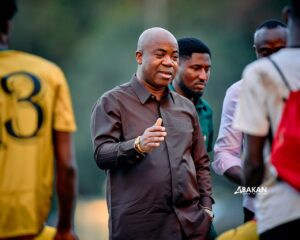
Deen also challenged sports journalists to extend the level of coverage often reserved for Ghana’s senior national football team, the Black Stars, to the Black Challenge and other disability sports.
“As national team players, they have seen what you, the media, have been doing for the Black Stars. They have also seen what you have been doing for other sports,” he said.
“As experienced advocates for sports in this country, I believe they deserve even greater attention than what you have been giving to others.”
The Africa Paralympic Committee president argued that limited public visibility, rather than a lack of talent, had contributed to the relative neglect of amputee football in the national sporting conversation.
“That is why we want Ghanaians to see who they are. When we talk about amputee football, we have some of the best players here in Ghana. It is just that many of you have not paid attention to them,” he said.
“If you watch the video clips, you will be able to confirm what I have said: these are currently some of the best players in the world.”
His message was a direct appeal to media organisations to tell the players’ stories, showcase their abilities and help build a stronger connection between the team and the Ghanaian public.
$500,000 Gold Fields sponsorship offers a boost
Beyond media visibility, Deen emphasised the importance of private-sector investment in ensuring that Ghana’s amputee footballers receive the preparation and resources necessary to compete internationally.
He argued that supporting a team with Ghana’s record of continental success should be considered an investment in national sporting achievement.
“If I have the best team, why shouldn’t my team and I give them the best preparation and everything they deserve? What we are doing is not even enough,” he said.
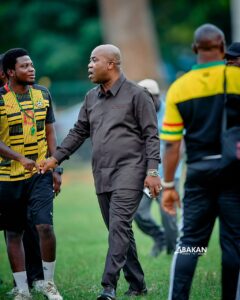
Deen believes increased publicity could encourage more companies and individuals to support the team, helping to ease the financial burden on public institutions and sports administrators.
“We believe that if you spread the message and let Ghanaians know about these players, they will come on board with the necessary sponsorship, and together we will support the government in providing the best for them,” he said.
“The government alone cannot do it, and neither can the National Paralympic Committee.”
He cited the decision by Gold Fields Ghana Limited to support amputee football with a two-year sponsorship package valued at $500,000 as an important milestone for disability sport in Ghana.
“That is the highest sponsorship amount ever received by a disability sport in Ghana. It is unprecedented and has never happened before,” Deen said.
The partnership represents a significant opportunity to strengthen the sport’s development and support efforts to improve the environment in which amputee footballers train and compete.
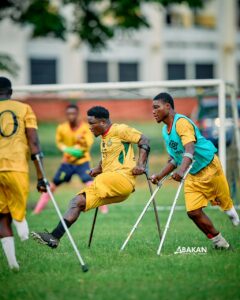
Deen’s comments also underscored the need for a collaborative approach involving government, the NPC, corporate Ghana, the media and the wider public.
For the Black Challenge, such support could help turn their continental achievements into a sustained programme aimed at competing for the highest honours in international amputee football.
Mexico 2026: The challenge ahead
The Black Challenge will enter the tournament carrying the expectations that come with being three-time African champions across the 2021, 2023 and 2024 championships.
However, their immediate task will be to navigate a demanding Group D campaign against Angola, Colombia and Iraq before pursuing their ambition of reaching the final.
Tournament: 2026 WAFF Amputee Football World Cup
Host country: Mexico
Host city: San Juan de los Lagos
Dates: November 13–22, 2026
Group D opponents: Angola, Colombia and Iraq.
As the countdown to Mexico continues, the Black Challenge are sending a message that extends beyond the training ground. They believe they have the talent, experience and determination to compete for the world title. What they now want is the support, preparation and national recognition to match their ambition.
Ghana’s amputee footballers have already established themselves as a force in Africa. Their next challenge is to turn that dominance into a defining moment on the world stage and bring home the gold they are determined to win.