


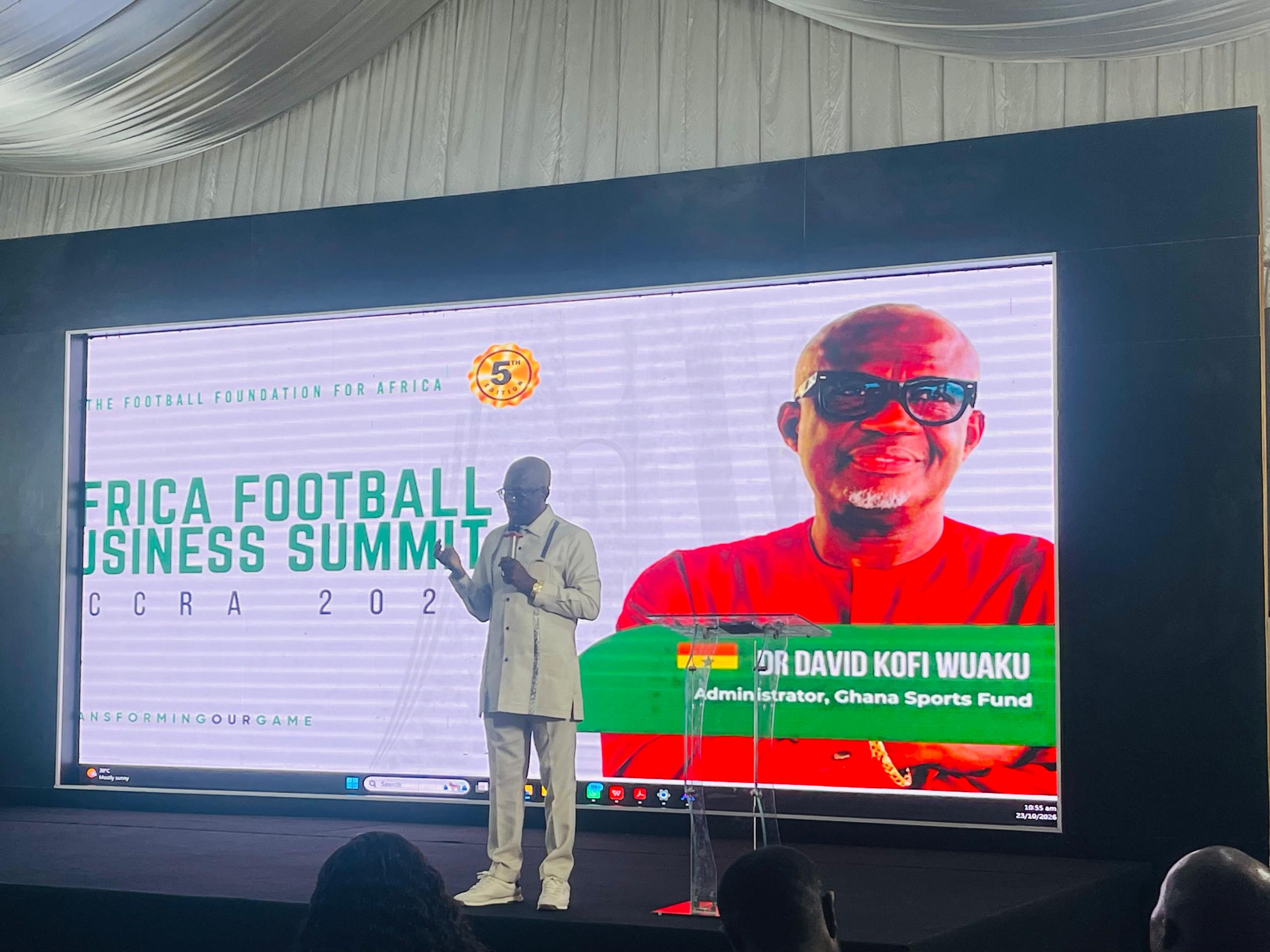
Weak financial governance and poor management structures at many African football clubs are discouraging potential investors and limiting the growth of the continent’s football industry, Administrator of the Ghana Sports Fund, Dr David Kofi Wuaku, has warned, calling for greater transparency, accountability and professional administration to turn clubs into sustainable, investment-ready businesses.
He argues that clubs cannot expect sustained private investment if prospective financiers lack confidence in their accounts, ownership structures and ability to generate reliable returns.
Speaking at the Africa Football Business Summit 2026 in Accra, Dr Wuaku identified club governance as a major factor in Africa’s struggle to retain the economic value generated by its football talent.
He noted that many clubs are owned by governments, individual patrons or their members rather than being operated as professionally managed businesses with audited financial accounts.
Such arrangements, he argued, can make clubs difficult to assess and finance because investors need transparent information about their assets, liabilities, revenues and decision-making structures.

Dr Wuaku said professional governance would help clubs negotiate from a stronger position in player transfers, protect their commercial interests and secure more sustainable investment.
He called for stronger club licensing, audited accounts, improved data management and professional administration of matches, tournaments and sports facilities.
He also argued that clubs must retain greater value from the players they develop through transparent transfer arrangements, training compensation and sell-on fees.
According to him, a stronger domestic football industry would be better placed to retain quality players, attract audiences and increase revenue from broadcasting, sponsorships and merchandise.
Dr Wuaku further distinguished between the funding requirements of the supply side of football, such as grassroots development and infrastructure, and the commercial opportunities available on the demand side, including media rights, sports technology and well-governed clubs.
He said private equity and venture capital could play a role in the latter, but investors would require sound governance and a clear route to recovering their investment.
The Ghana Sports Fund, established under the Ghana Sports Fund Act, 2025 (Act 1159), is intended to support sustainable financing for sports development.
Dr Wuaku’s argument places accountability at the centre of the investment debate: talent and commercial potential alone are insufficient if clubs cannot demonstrate that they are capable of managing money and protecting investors’ interests.
The challenge for African football, he said, is to establish institutions capable of turning sporting success into sustainable businesses.